Give each place a distinctive starting point
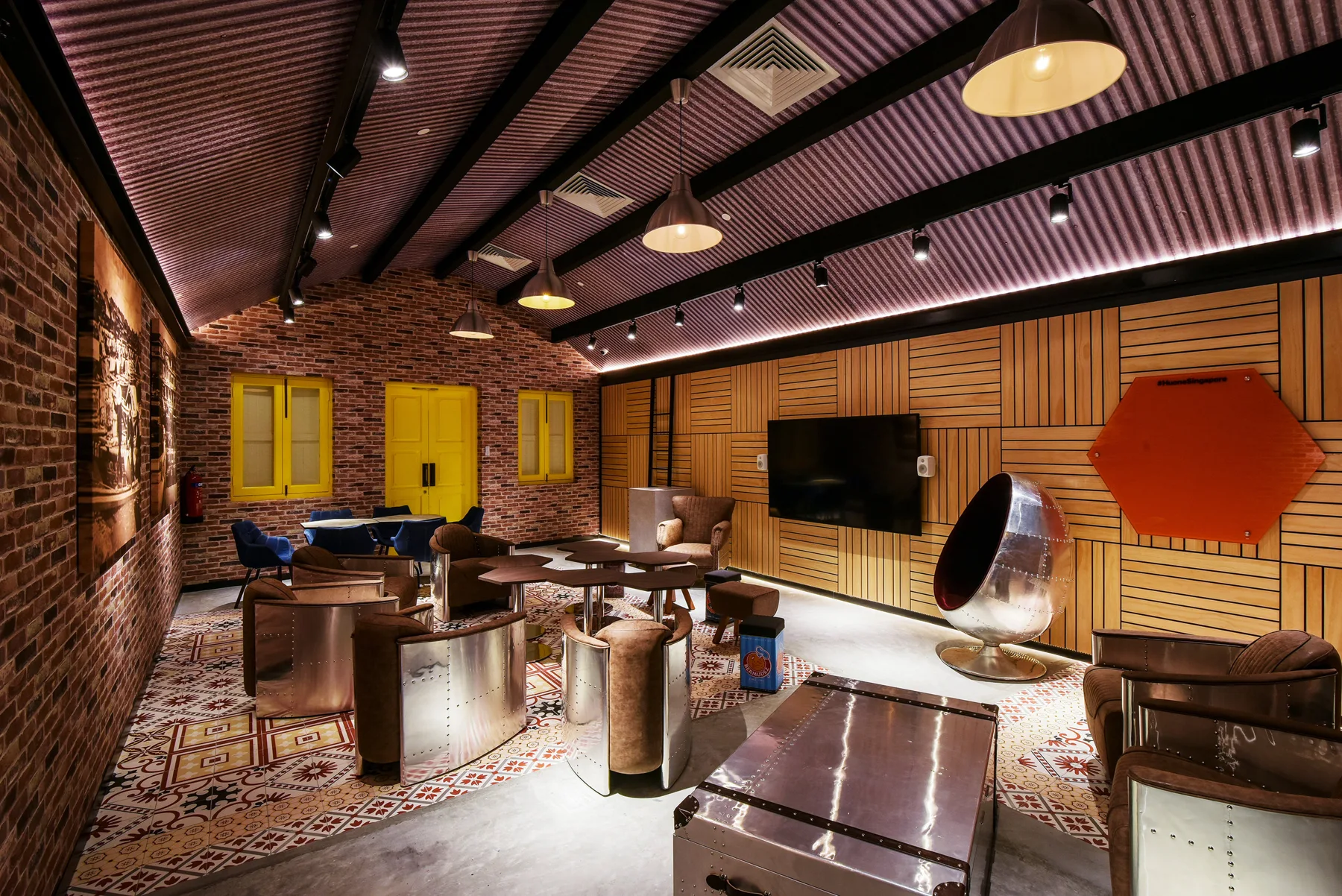
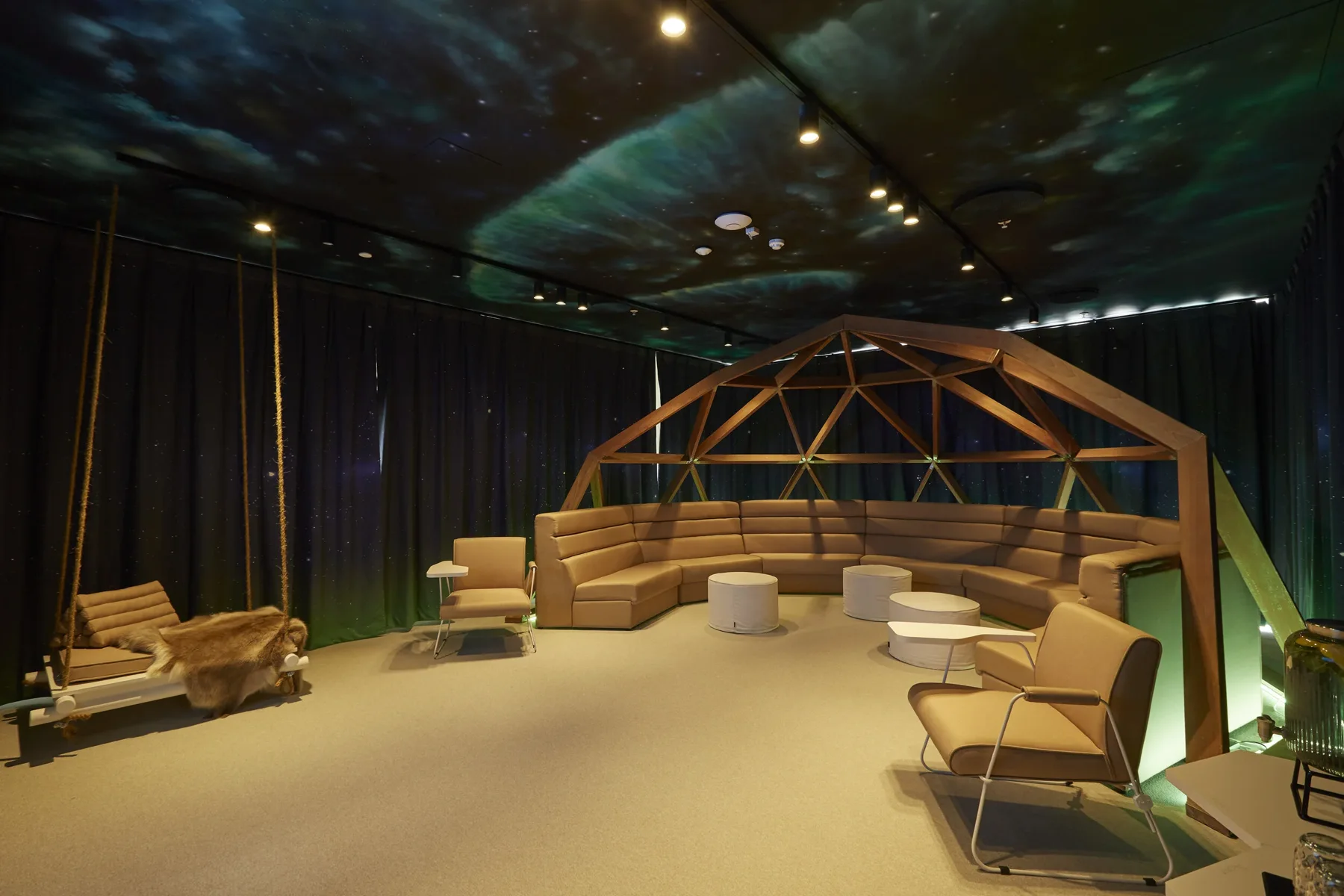
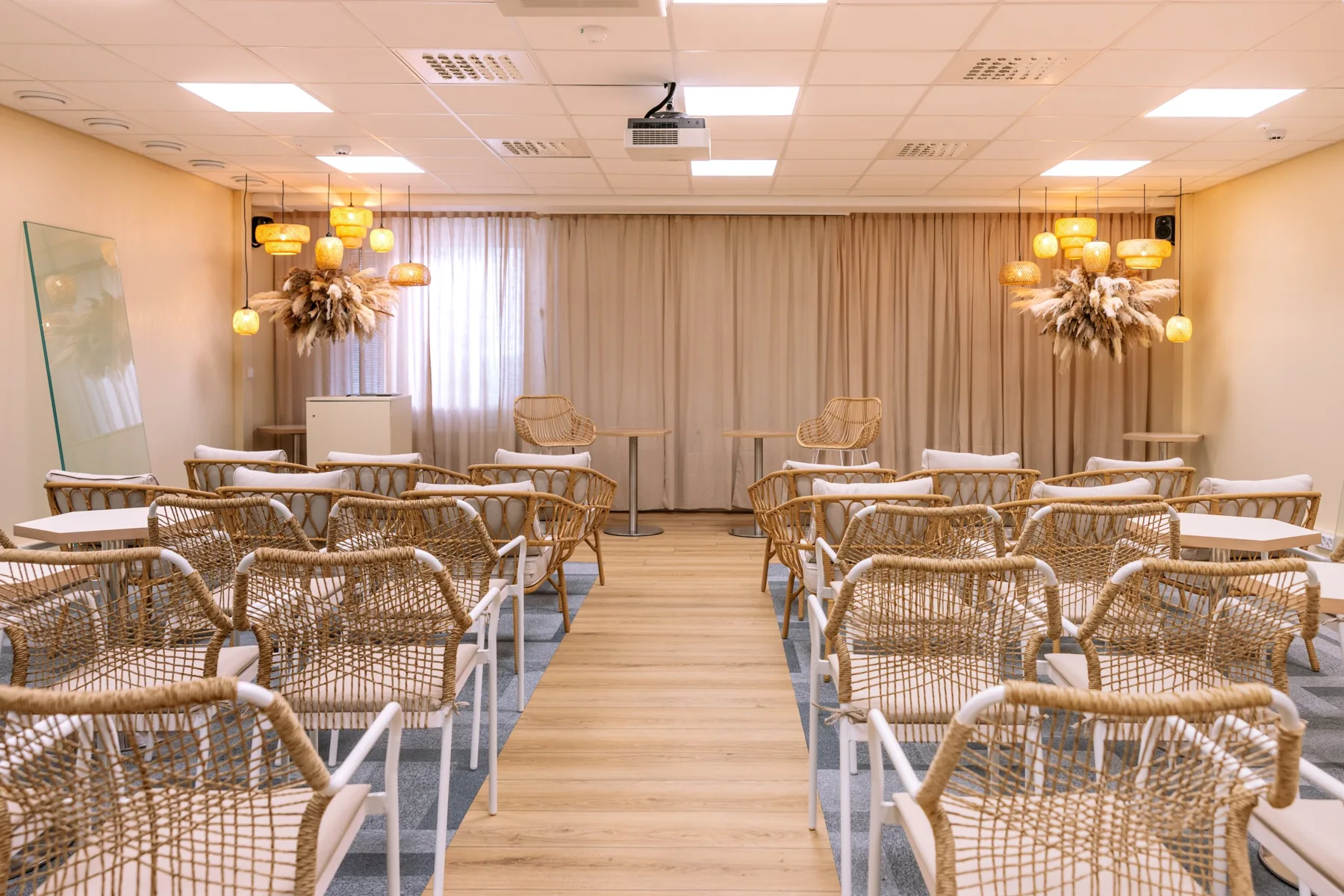
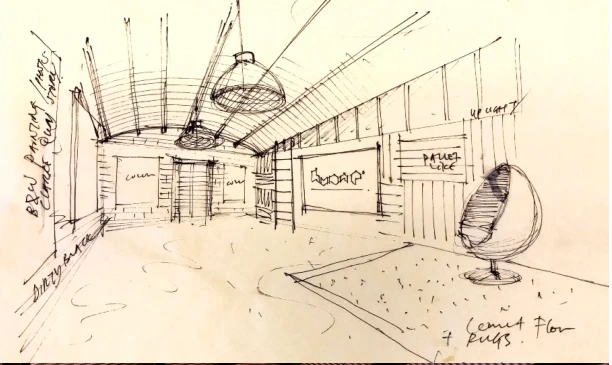
HUONE’s meeting concept connects collaboration with atmosphere and storytelling. In Singapore, the early sketches drew on Clarke Quay’s trading-port and warehouse history. In Copenhagen, observation and colour matching along Nyhavn informed the interior palette. A shared brand language can therefore accommodate local character rather than repeat one interior everywhere.
Use planning to support more than one format
Edition 2 presents flexibility as a central requirement for event spaces. Its published plan brings together reception, lounge, meeting and breakout areas, with support spaces around them. The layout shows how the arrival experience and informal gathering areas contribute to the meeting offer. The reproduced drawing is a portfolio study; it is not a current booking-capacity or compliance plan.
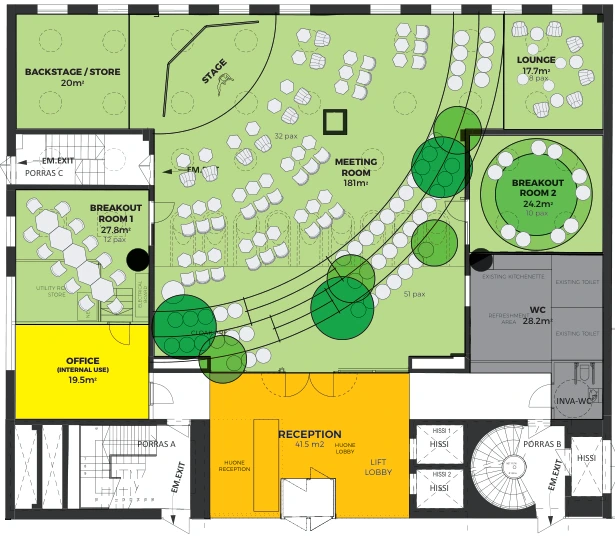
Published HUONE layout showing the relationship between reception, lounge, meeting and breakout spaces. Edition 2, PDF page 18; the spread does not name this drawing’s individual venue.
Follow the idea into fabrication
The profile records site measurement, conceptual sketches, factory inspections, digital fabrication and engraved components as parts of the design process. These activities bridge the gap between a convincing drawing and an element that can be made, transported and installed. The fabrication photographs show this practical side of design development.
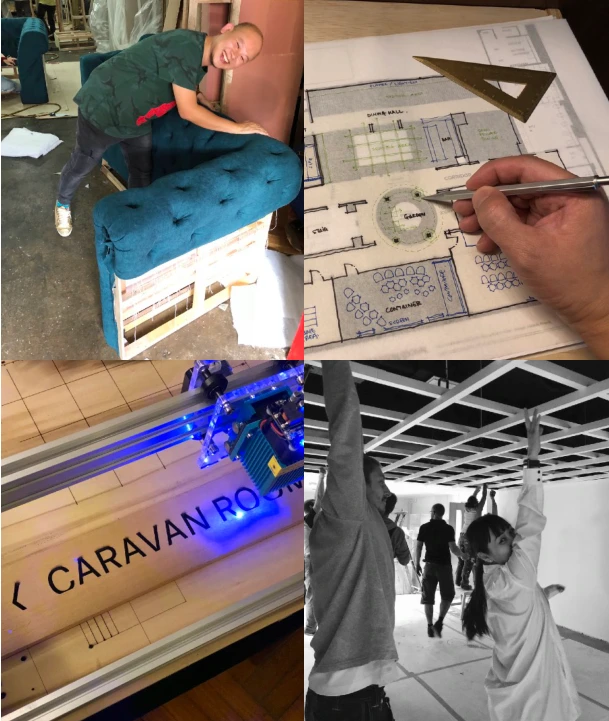
Source photographs of hands-on design work and fabrication across the HUONE programme. Edition 2, PDF page 17.
Design for the route into the building
For Helsinki projects, narrow doorways and limited access in older buildings affected the size and assembly of joinery. Modular fabrication allowed large pieces to be transported in parts and assembled on site. The lesson is to consider delivery and installation while developing the detail, rather than treating logistics as a separate final-stage task.
Prototype components and coordinate at a distance
The programme also explored 3D-printed components and iterative prototyping. For HUONE Kluuvi, the profile describes remote site observation through video walkthroughs, conference calls and shared Google Slides workshops. These examples are programme-wide methods; they should not be read as evidence that every illustrated component belongs to the same venue.
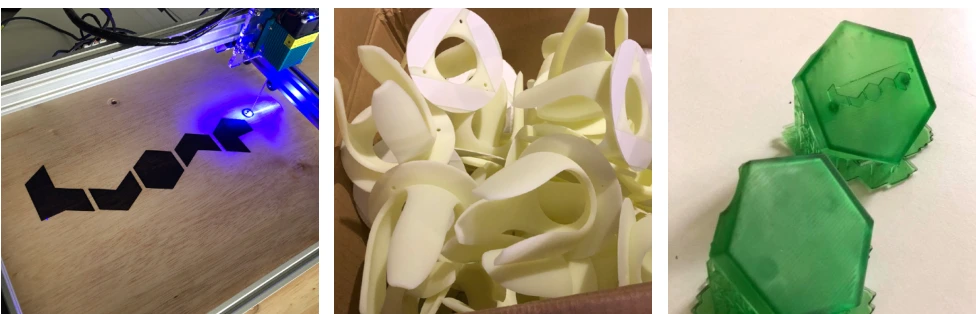
Digital fabrication and prototype components illustrated in the HUONE case study. Edition 2, PDF page 17.
Adapted from DMZ Portfolio Edition 2, PDF pages 15–18. Drawings, studies and photographs are reproduced from the original case study.