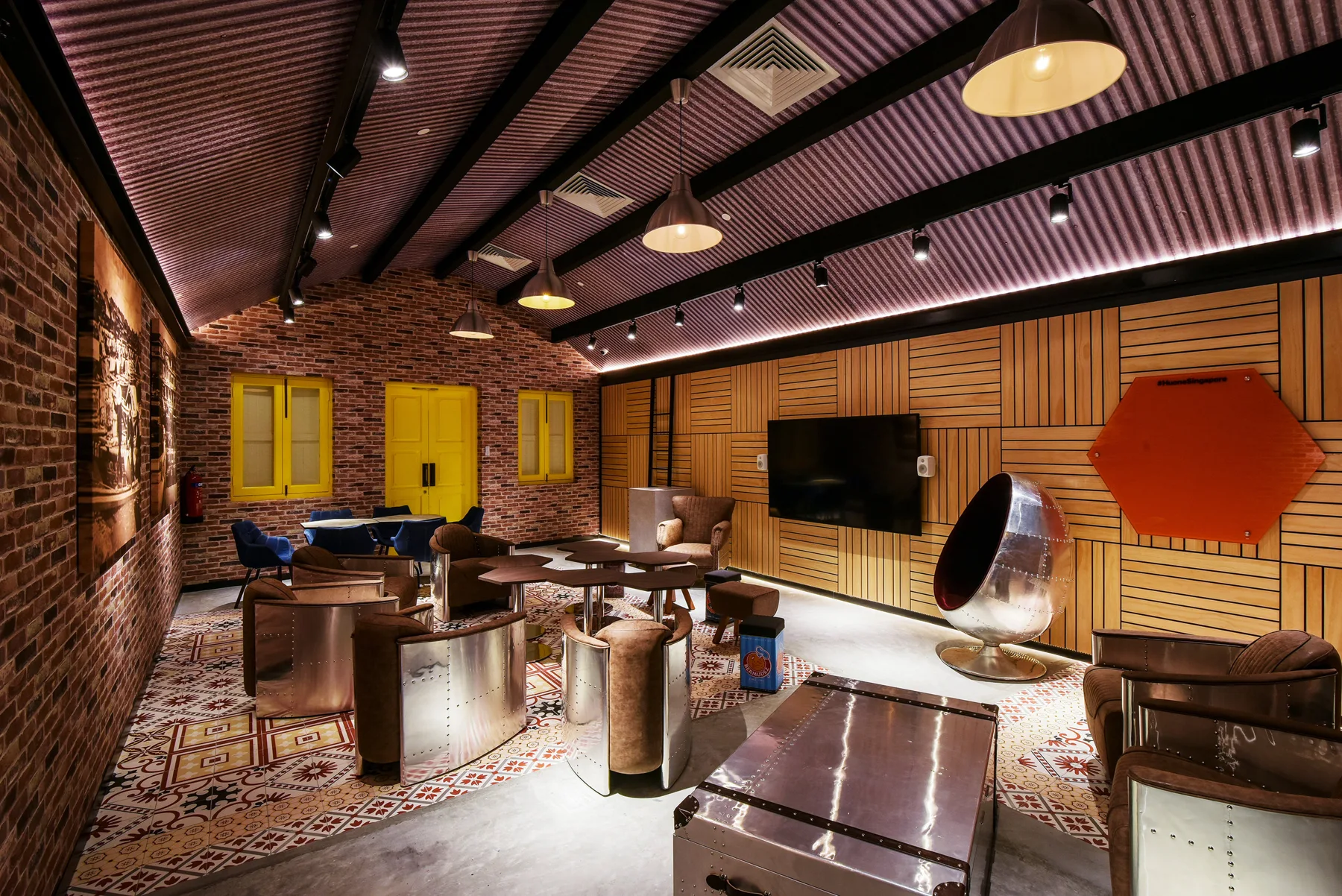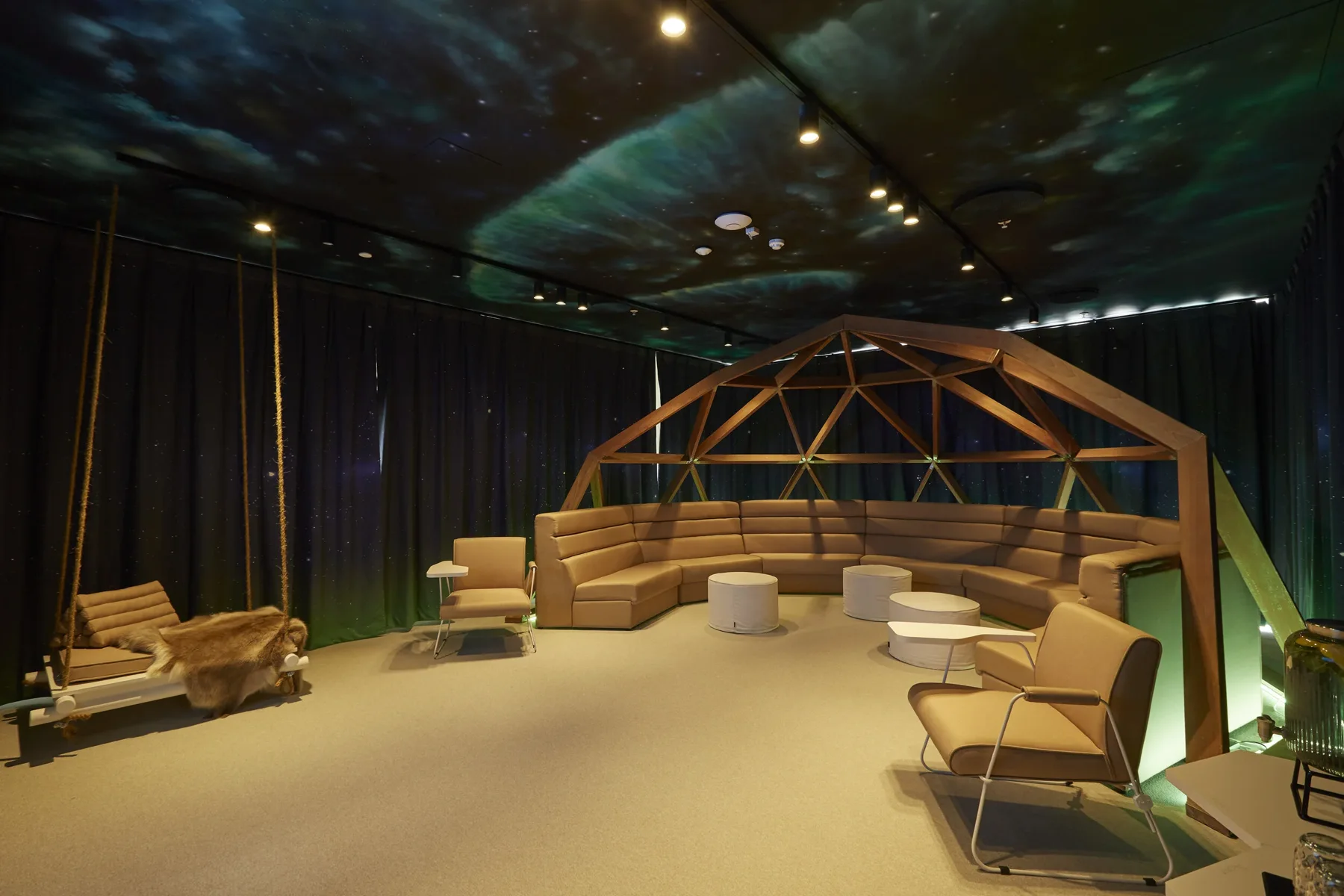
One purpose, several local expressions
The HUONE collaboration brings a shared purpose to different cities: places for meetings, workshops and gatherings. Each venue can express that identity through its own surroundings. The Copenhagen process records show the work behind that adaptation, from observing the city to testing ideas on paper and in physical form.
Study the city at street level
In Copenhagen, the team took colour references outside, comparing swatches with the painted façades of Nyhavn. These photographs record direct observation of the buildings and their colours. The exercise created a local reference for the interior palette, connecting design decisions to a place the team had experienced first-hand.
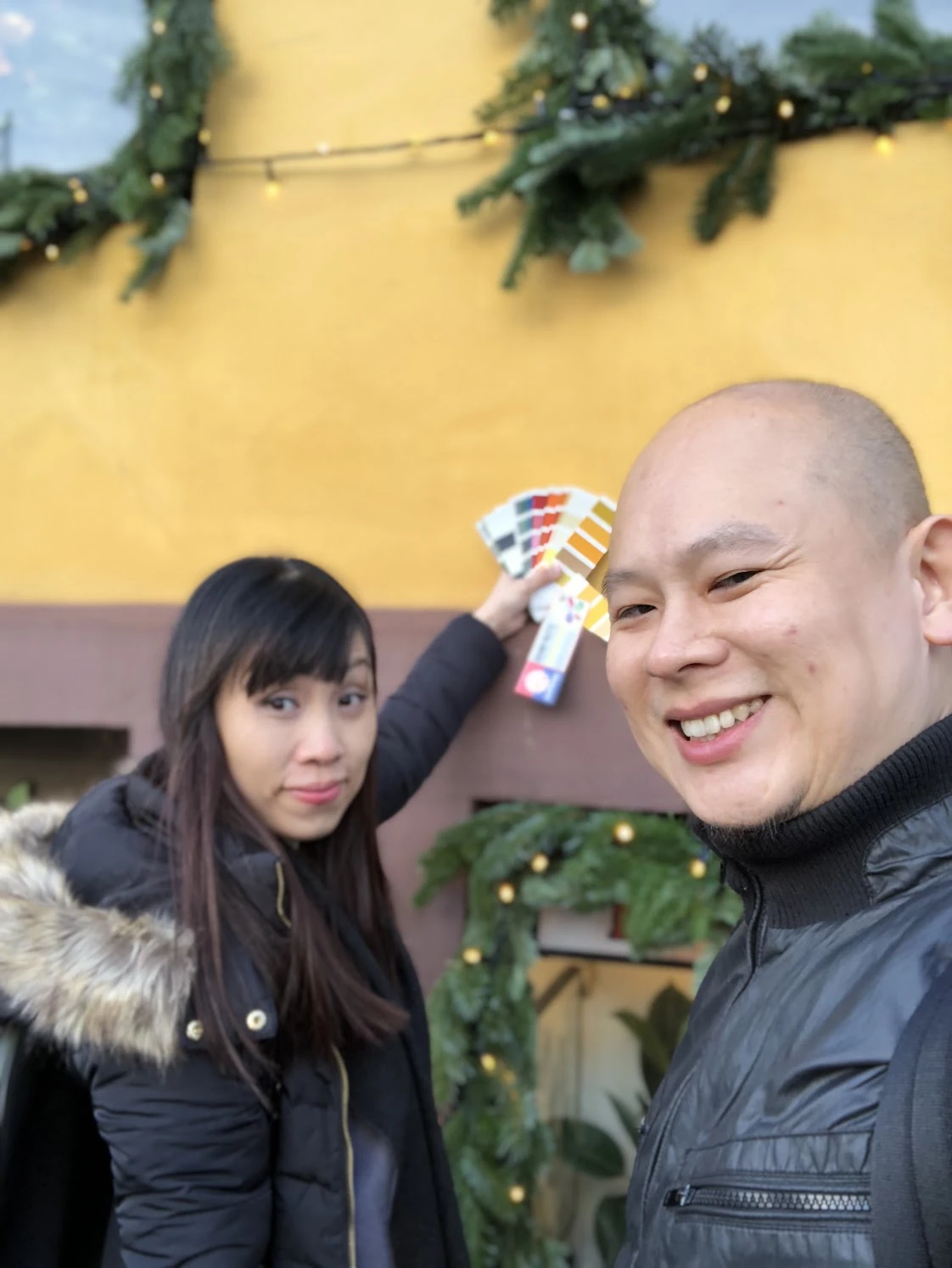
The team compares a colour fan against a painted façade in Copenhagen.
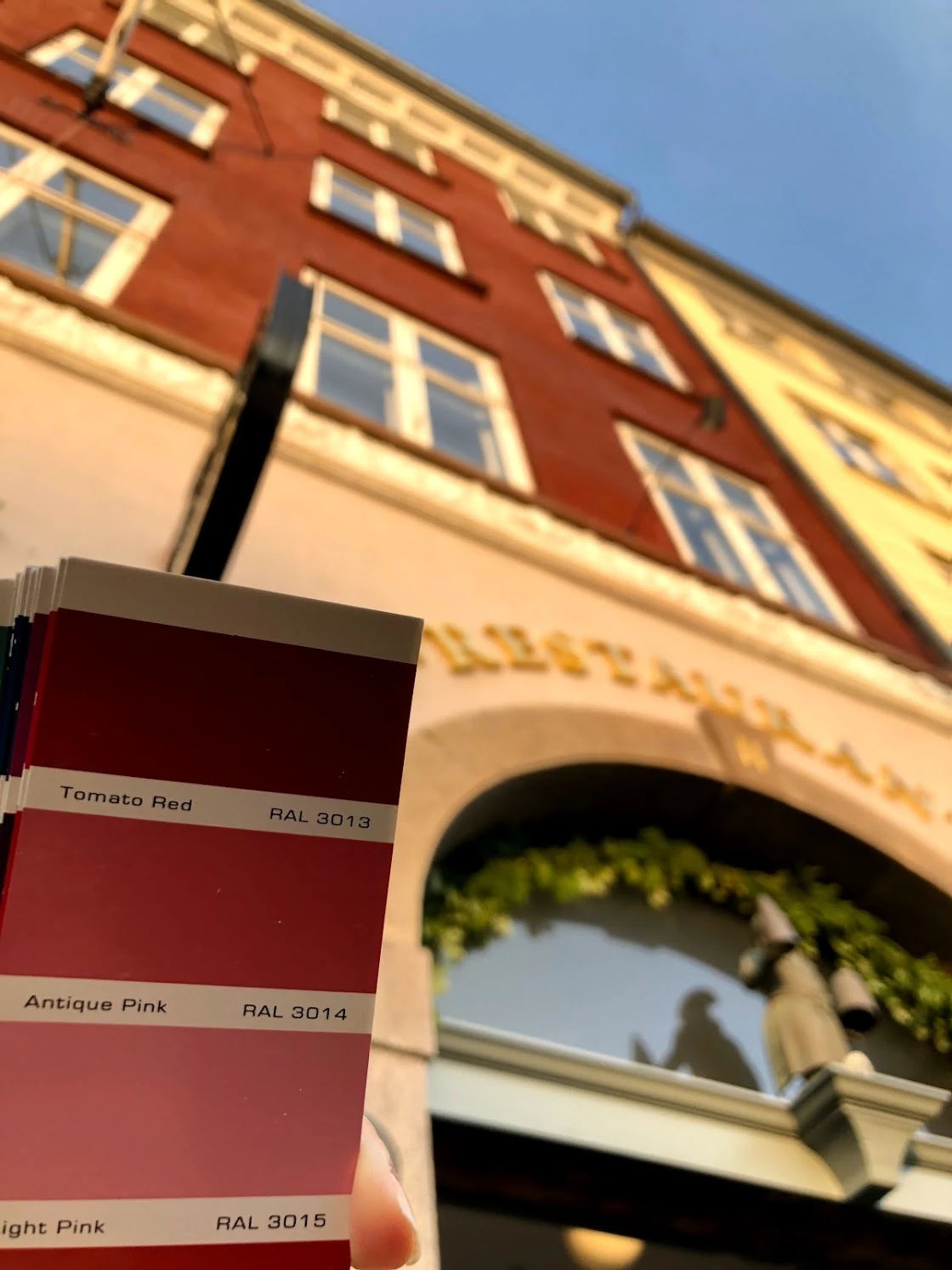
Colour swatches held against the street’s architecture record the relationship between the palette and the place.
Work through the plan
Printed plans, annotations, tracing overlays and a set square show the hands-on review of the layout. This stage brings spatial relationships into focus: how rooms sit together, how routes connect and how the overall venue can support different kinds of gathering. The drawings make the effort of developing and revisiting the plan visible.
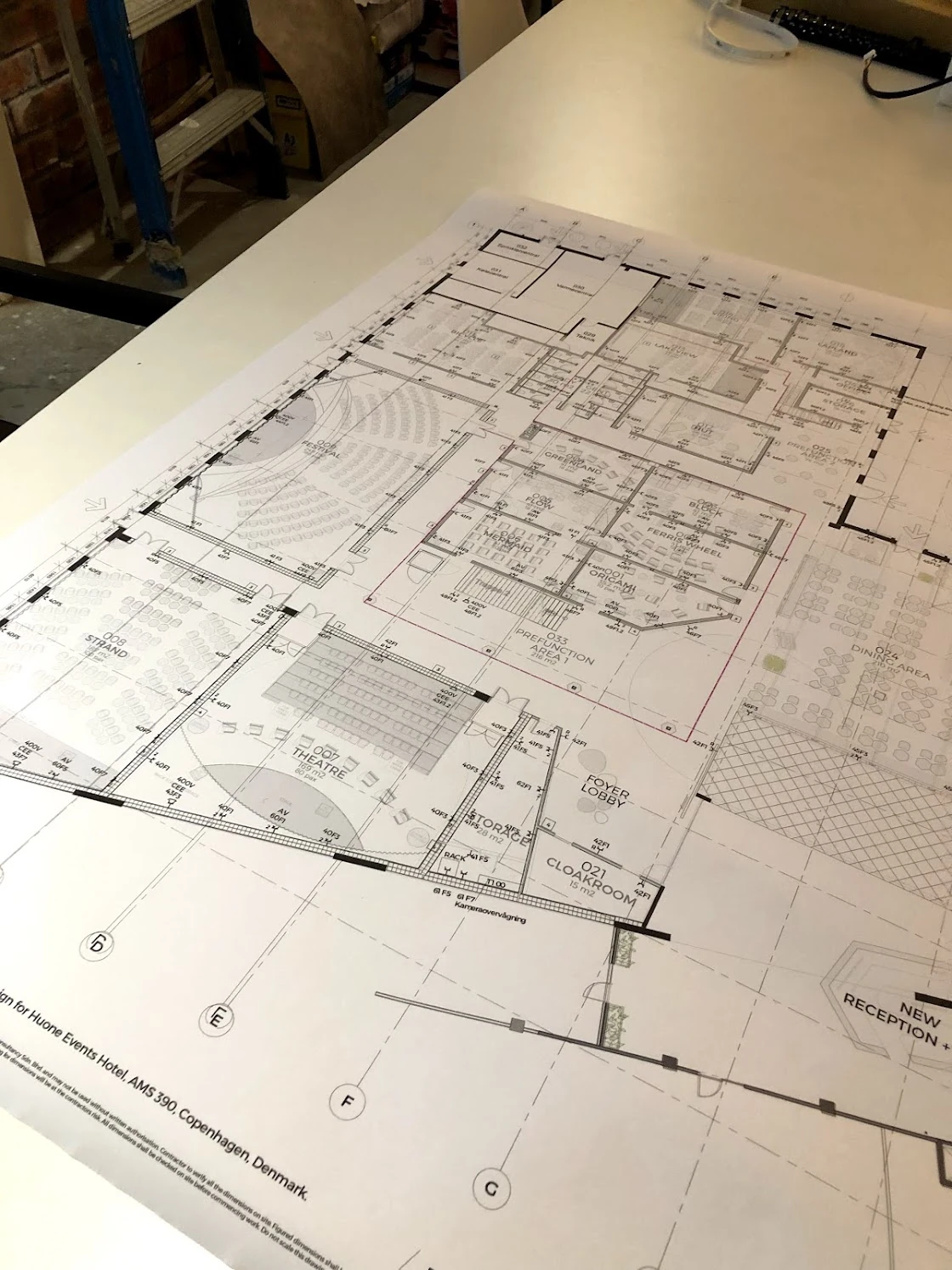
A printed layout with working annotations and overlays captures the design review process.
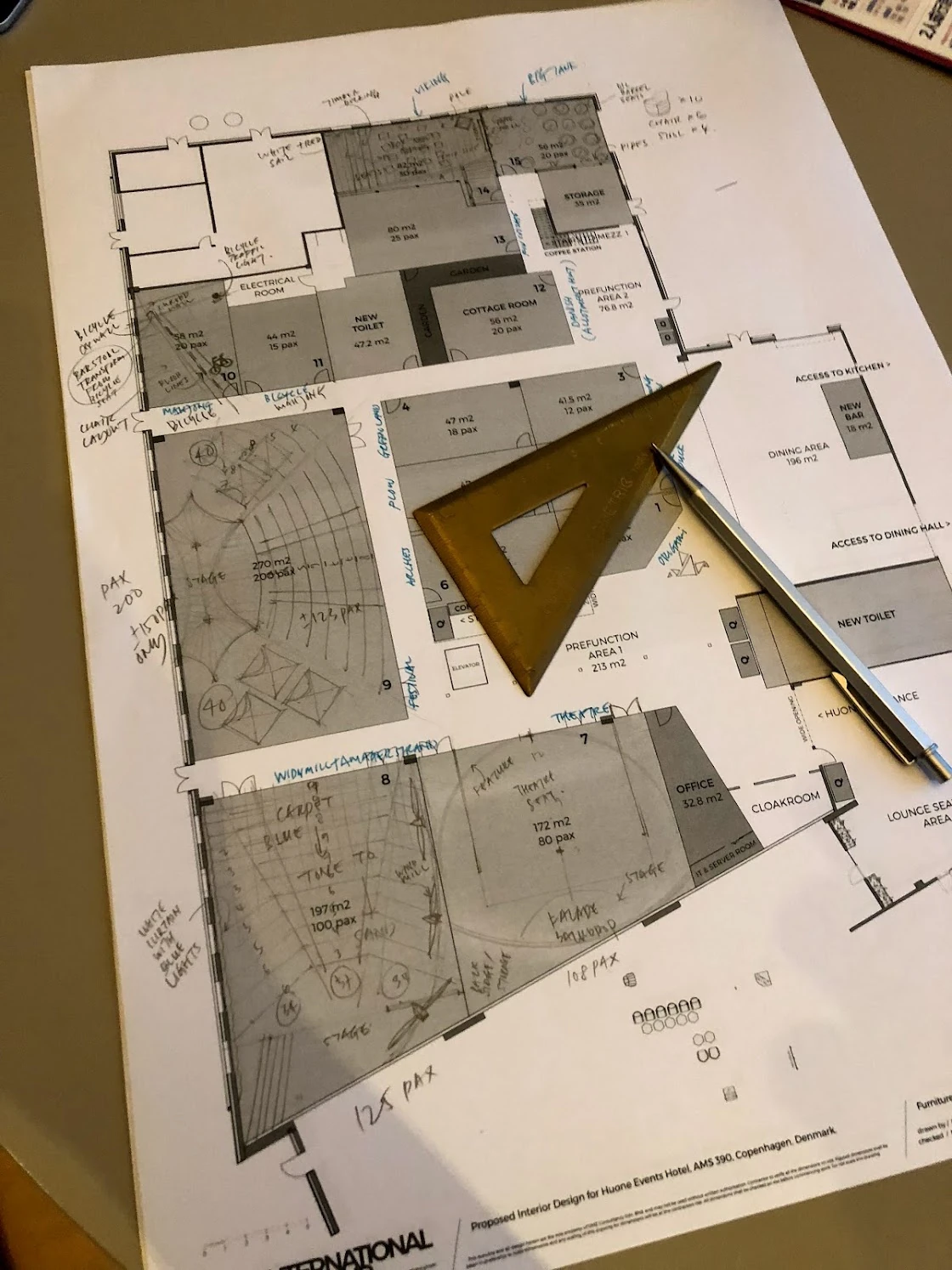
A set square, printed plan and handwritten notes show the layout being worked through on paper.
Translate the reference into an elevation
The Collage elevation study explores architectural silhouettes through a scaled drawing. Building outlines, openings, figures and the HUONE identity are considered together. It shows how local references can become a spatial composition that the team can review and develop in detail.
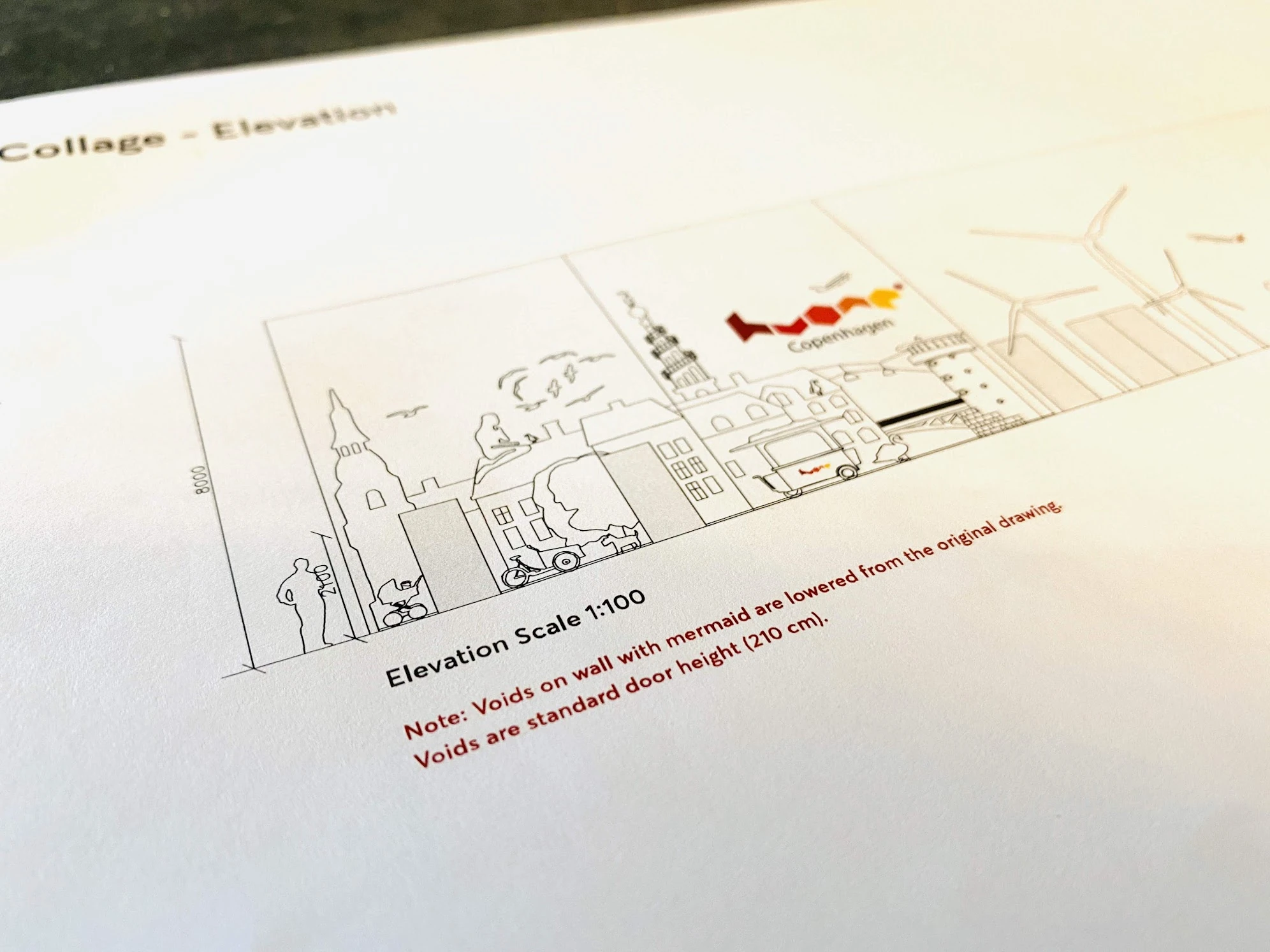
A scaled elevation brings architectural silhouettes and the HUONE identity into one design study.
Brand identity within the HUONE Furniture System
The 3D-printed furniture component belongs to the HUONE Furniture System and carries the client’s brand logo. It demonstrates how custom fabrication brings brand identity into the furniture itself, extending the design language from room-scale planning to individual furniture parts.
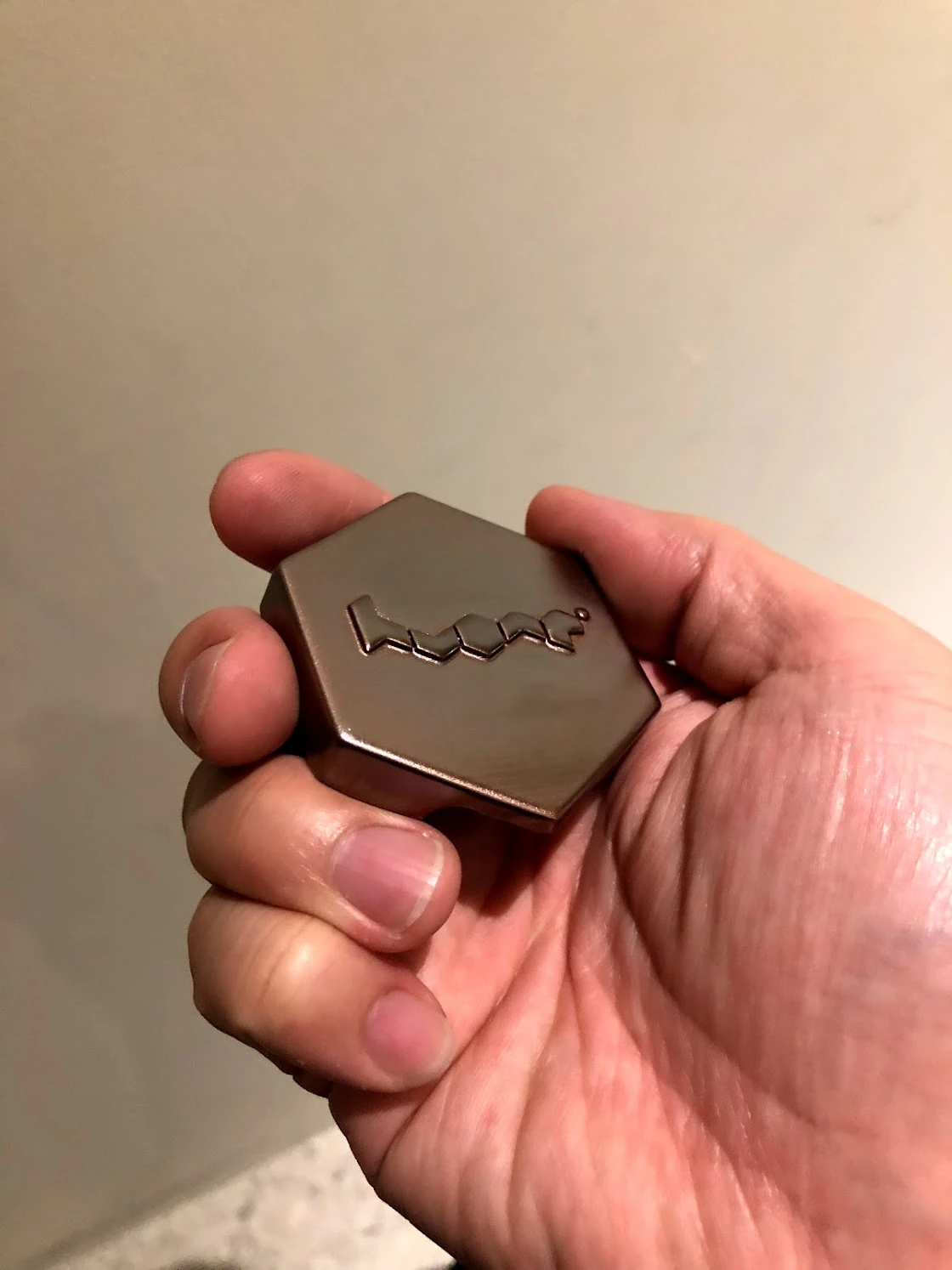
A 3D-printed component for the HUONE Furniture System, featuring the client’s brand logo.
Carry the approach across borders
The wider HUONE collaboration applies the same attention to context in different settings. In Singapore, Clarke Quay’s waterfront and warehouse history informed the design references. Copenhagen draws on its own streets and architecture. Across both, a shared identity develops through observation, interpretation, drawing and review, leaving room for each venue to feel rooted in its location.
Process photographs supplied by DMZ, September 2026. Project context is drawn from the DMZ company profiles.