Ceiling & lighting geometry
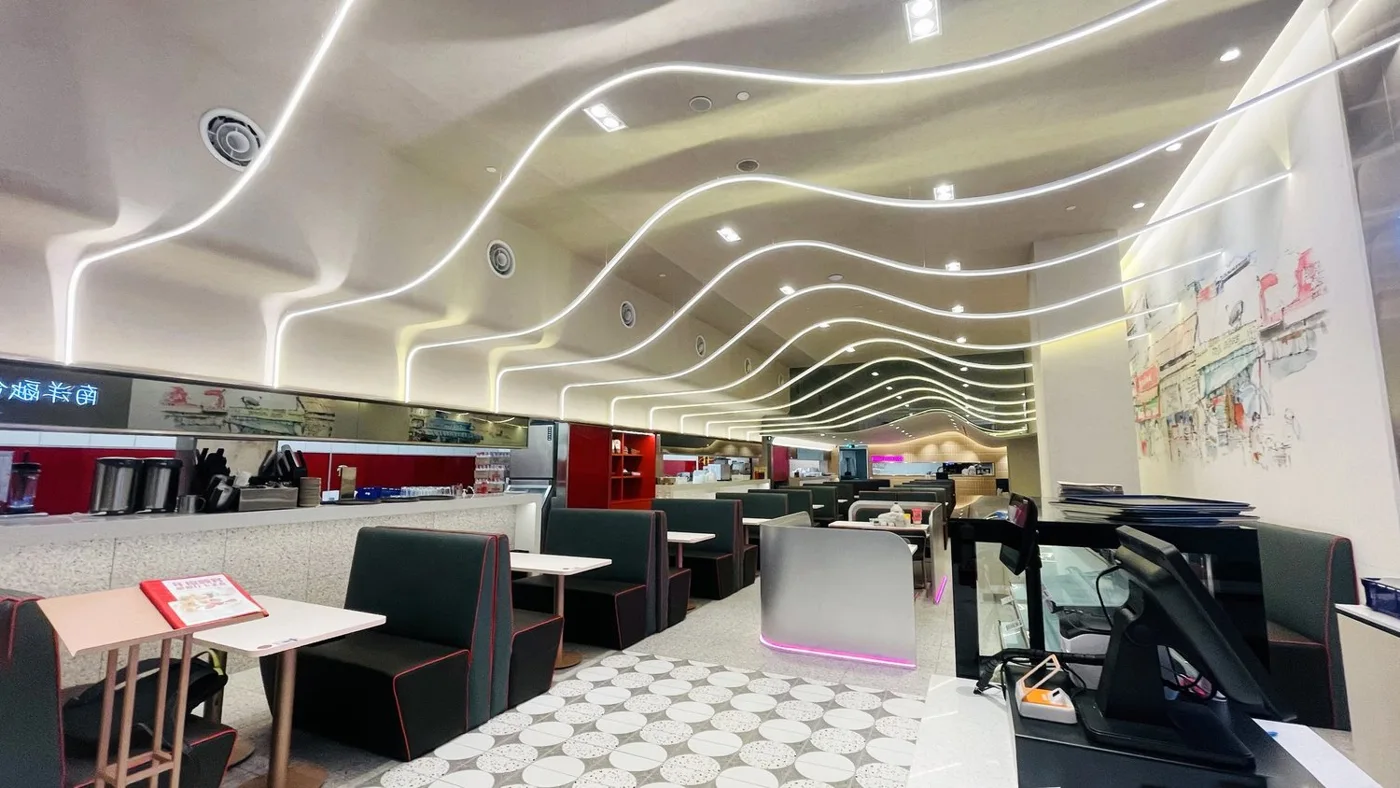
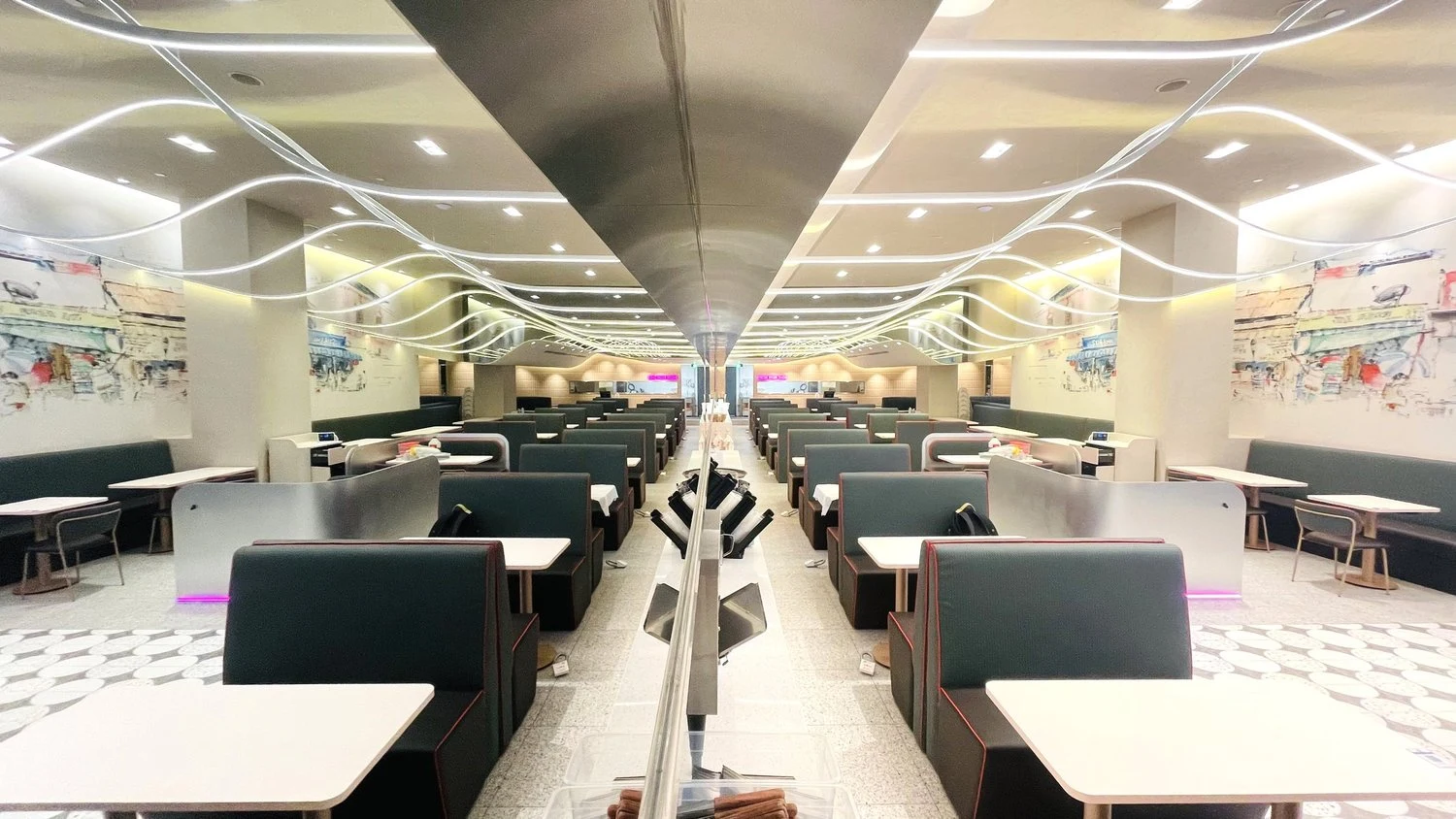
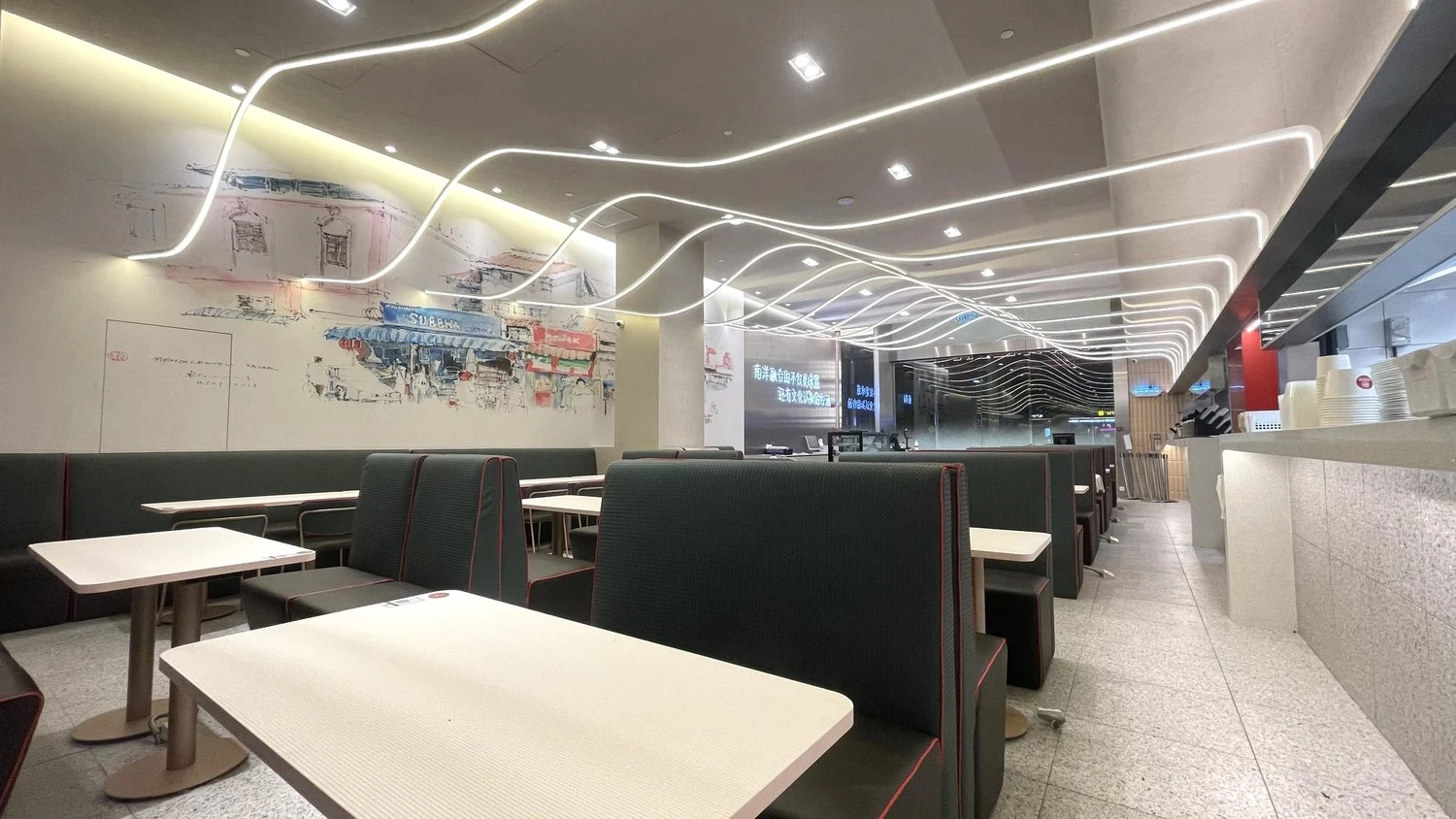
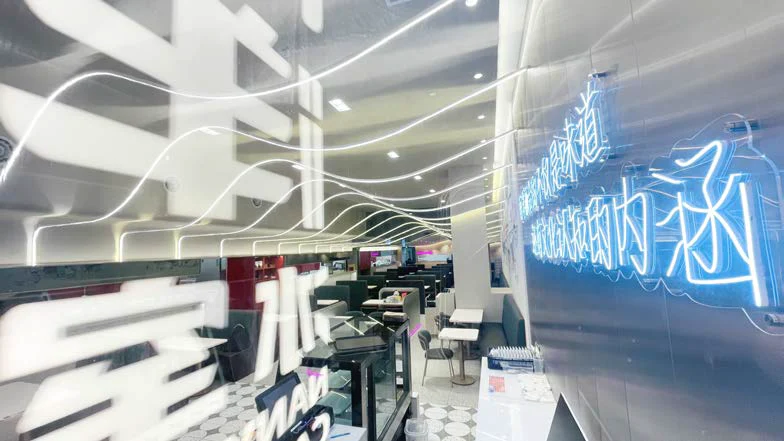
Continuous curved light lines follow the interior volume. Edition 2 describes site constraints as a starting point for the wave geometry, which guides movement and establishes spatial rhythm.
A wave of light connects the dining room.
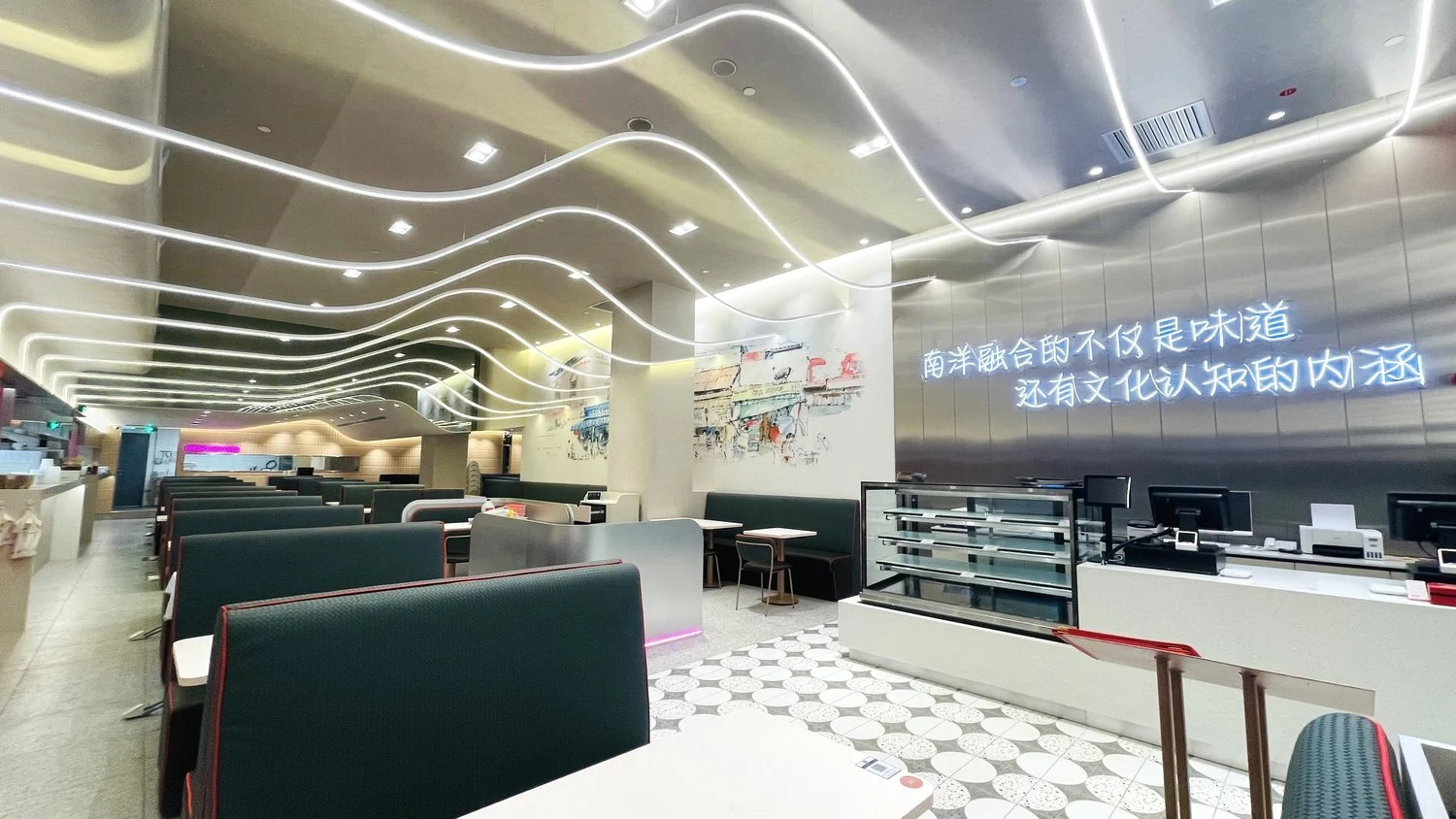
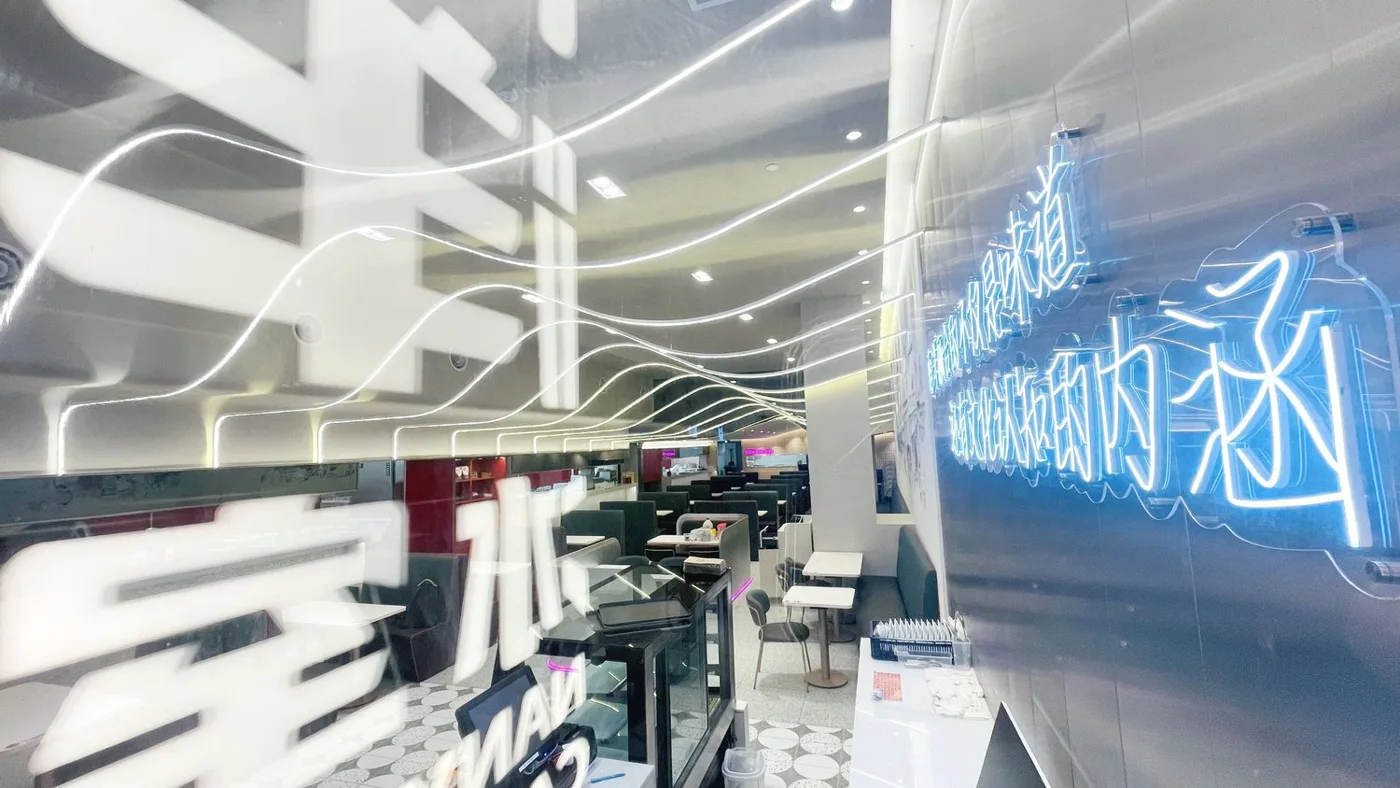
Continuous curved lighting interprets sea journeys to Southeast Asia within a contemporary Nanyang café.
Edition 2 describes sea waves and historic Chinese voyages to Southeast Asia as the reference for the lighting. The concept connects the restaurant’s identity with the shape of its interior.
Curving lines trace the ceiling and respond to spatial constraints. Lighting becomes part of the way the room’s volume and movement are perceived.
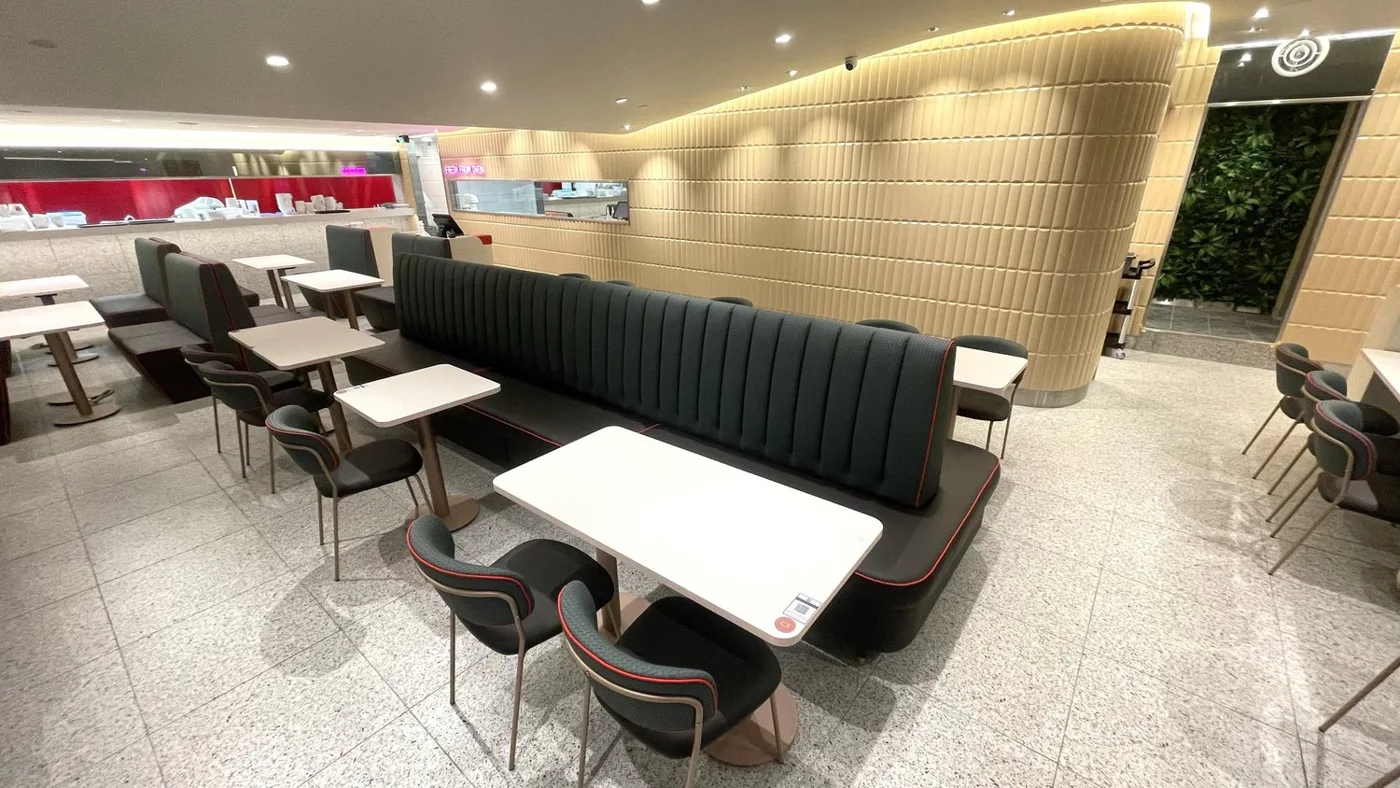
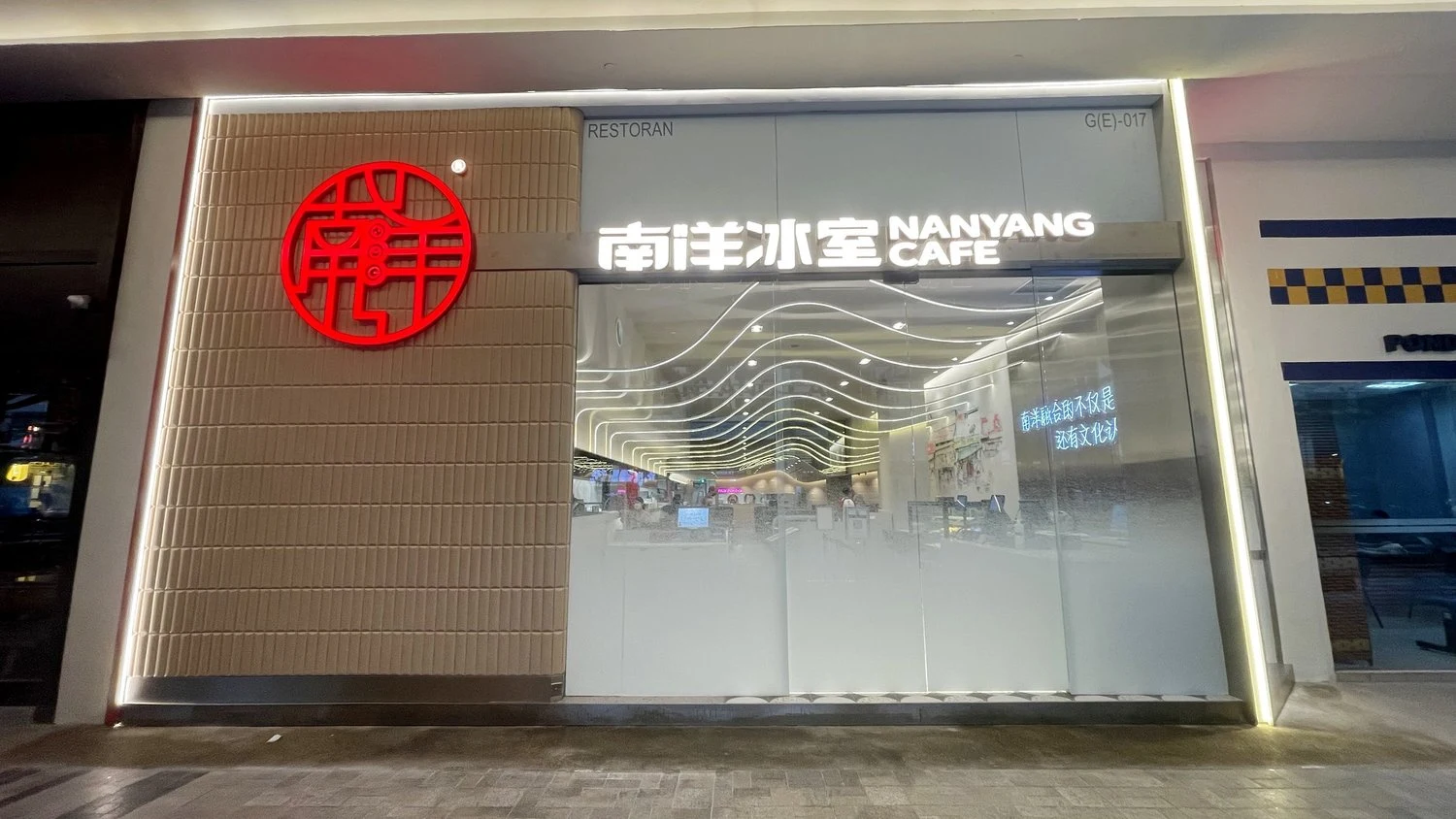
The project photographs show a repeated wave above linear seating arrangements. This contrast gives the ceiling an expressive role while the dining layout retains a clear order.
Continuous curved light lines follow the interior volume. Edition 2 describes site constraints as a starting point for the wave geometry, which guides movement and establishes spatial rhythm.
The wave references maritime journeys to Southeast Asia. Its repetition makes lighting a continuous architectural element rather than a collection of isolated decorative fittings.
Project decisions documented in DMZ company profile, Edition 2. Programme-wide methods and design studies are identified where applicable.
DMZ company profile, Edition 1, PDF page 20; Edition 2, PDF page 25.
Tell us about your project, its location and the experience you want to create.